Recommendation requests reveal timing
Early adopters often say they are choosing now, replacing something soon, or testing options this week, which is stronger than generic category curiosity.
Use recommendation requests to find early adopters who are actively evaluating options, exposing constraints, and giving founders a warmer path into demand discovery.
Recommendation requests are one of the cleanest public signals for early-adopter discovery because the buyer is already describing what they need, what they dislike, and what they are willing to test next. That makes them useful for both founder-led replies and sharper validation research.
Early adopters often say they are choosing now, replacing something soon, or testing options this week, which is stronger than generic category curiosity.
Budget, team size, technical complexity, and workflow pain make it easier to recognize whether the buyer matches your product's real wedge.
Follow-up questions, objections, and named competitors often show what proof an early adopter still needs before trying something new.
The same recommendation thread can inform early outreach, onboarding promises, pricing questions, and which comparisons need to exist first.
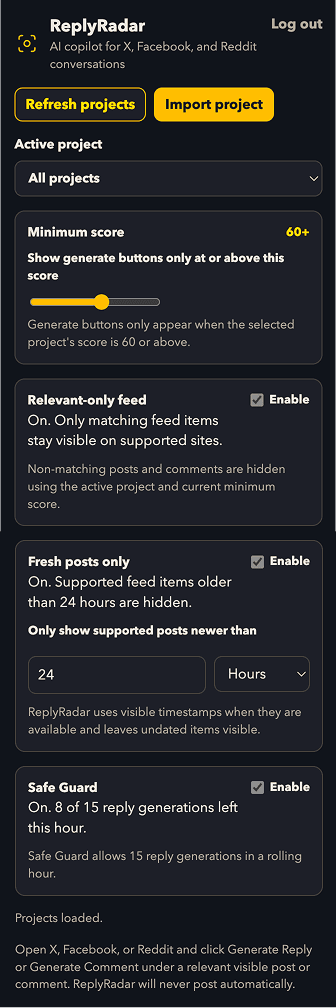
ReplyRadar keeps discovery, qualification, and reply drafting close to the live Reddit or X conversation instead of hiding the work in a generic dashboard.
Teams can review fit signals, discussion context, and reply angles before deciding whether the conversation is worth joining.
Unlike broad social chatter, recommendation requests already sound like evaluation. They tell you what the buyer is trying to solve and what kind of language will shape the shortlist.
A buyer asking for recommendations usually describes the workflow they need to improve, not just the category they belong to.
When peers reply with incumbents, alternatives, and warnings, you learn which comparisons matter before you ever publish another page.
People willing to ask peers in public are often more open to testing, switching, and trying a new operating model than colder database segments.
The strongest opportunities combine product fit, urgency, and enough context to tell whether the person is likely to act. That is where founder judgment matters most.
Requests that start from frustration with the current setup often convert better than generic best tool questions because the buyer already feels the pain of staying put.
Posts that mention team size, budget sensitivity, integrations, or implementation limits are easier to prioritize than abstract category requests.
The objections other people raise in the thread often tell you what your page, demo, or founder response still needs to prove.
The goal is not more alerts. The goal is a clearer review queue that keeps the recommendation language, alternatives, and urgency visible while the thread is still useful.
Pair your product category with recommend, alternative, replace, or worth it language so the queue starts closer to active evaluation.
ReplyRadar helps the operator judge whether the right response is a public reply, a saved research note, or a new comparison angle.
Early-adopter threads should strengthen pricing clarity, onboarding promises, and use-case content while the language is still fresh.
Because they usually come from people who are already willing to compare options, state constraints, and explain what they need next. That is much closer to adoption behavior than passive browsing.
Not always, but they often reveal stronger timing and fit than broader conversation types. The goal is to prioritize the threads where urgency, pain, and context align.
ReplyRadar helps founders monitor recommendation requests, preserve the details that matter for qualification, and route the best threads into replies, research, or new content.
Start with the evergreen cluster for buying intent, recommendation monitoring, and high-intent conversation discovery.
Browse the public tool hub for lighter acquisition workflows around social listening, buying intent, and conversation review.
Review the product terms if your team wants clarity on account usage before rolling out a new monitoring workflow.
Own the moments when buyers ask what they should use, replace, or switch to next.
Track public demand signals across Reddit and X before the buyer fills out a form or talks to a competitor.
Focus on recommendation language, switching behavior, workflow complaints, and named competitors instead of vanity mentions.
Learn how to recognize and qualify social conversations that reveal active evaluation, pain, or recommendation intent.
Find SaaS buyers on Reddit by monitoring recommendation requests, workflow pain, and switch-ready threads instead of relying on generic prospecting.
Pressure-test startup ideas with live conversations that reveal demand, workarounds, urgency, and why existing tools are failing buyers.
See how ReplyRadar ranks recommendation posts, competitor complaints, and workflow pain against your positioning.
Understand the scoring layer behind the Reddit conversation discovery workflow.
Browse public ReplyRadar projects to see how different products frame their audience, pain points, and competitors.
Use ReplyRadar to monitor Reddit and X for recommendation requests, competitor complaints, and real workflow pain points that deserve a thoughtful reply.